
hamilton beach juicer instruction manual
Hamilton Beach Juicer: A Comprehensive Instruction Manual Guide
This guide provides detailed instructions for your Hamilton Beach juicer, ensuring optimal performance and longevity. It covers assembly, operation, cleaning, troubleshooting, and safety precautions. Understanding each step will maximize juice extraction and maintain your appliance effectively.
Welcome to the world of fresh, homemade juice! Your new Hamilton Beach juicer is designed to effortlessly extract nutritious juice from a wide variety of fruits and vegetables. This appliance empowers you to embrace a healthier lifestyle, providing a convenient way to incorporate vital vitamins and minerals into your daily routine. Before you begin your juicing journey, it’s crucial to familiarize yourself with the juicer’s capabilities and features.
This manual serves as your comprehensive guide, offering step-by-step instructions, safety guidelines, and helpful tips to ensure a seamless and enjoyable juicing experience. We’ll cover everything from assembling the juicer and preparing your produce to operating the machine, cleaning it effectively, and troubleshooting common issues. Remember, proper usage and maintenance are key to maximizing the lifespan and performance of your Hamilton Beach juicer. Enjoy the vibrant flavors and health benefits of freshly squeezed juice!
Unboxing and Component Identification
Carefully unpack your Hamilton Beach juicer and verify that all components are present. The box should contain the motor base, pulp container, juice collecting pitcher, feed chute, pusher, strainer basket, and a cleaning brush. Inspect each part for any signs of damage during shipping. If any components are missing or damaged, contact customer support immediately – details are found later in this manual.
Familiarize yourself with each component’s function: the motor base powers the juicer, the pulp container collects waste, the juice pitcher gathers the extracted juice, the feed chute guides produce into the strainer, and the pusher safely directs food down. The strainer basket separates juice from pulp, and the cleaning brush aids in thorough cleaning. Proper identification of these parts is essential for correct assembly and operation. Refer to the detailed diagram included in this manual for visual assistance. Keep the packaging for potential future transport or warranty claims.
Safety Precautions and Important Warnings
Before operating your Hamilton Beach juicer, carefully read and understand all safety precautions. Always unplug the juicer from the power outlet when not in use, before cleaning, and when assembling or disassembling. Never operate the juicer with a damaged cord or plug; Keep hands, hair, and clothing away from moving parts during operation. Do not operate the juicer continuously for more than 2 minutes; allow it to cool down between uses.

Never insert hard objects, such as metal utensils, into the feed chute. Use only the provided pusher to guide produce. Do not attempt to juice frozen fruits or vegetables without thawing them first. Ensure the juicer is stable and on a flat, dry surface during operation. Supervise children closely when the juicer is in use. This appliance is for household use only; do not use it for commercial purposes. Failure to follow these safety guidelines could result in injury or damage to the appliance.
Juicer Assembly: A Step-by-Step Guide
Begin by placing the motor base on a stable, level surface. Next, position the pulp container onto the back of the motor base, ensuring it clicks securely into place. Then, insert the strainer basket into the pulp container; align the tabs correctly for a snug fit. Following this, attach the cutting disc to the strainer basket, pressing down firmly until it locks. Place the inner cone inside the cutting disc, ensuring it’s properly seated.
Now, position the lid onto the juicer base, aligning the locking tabs. Rotate the lid clockwise until it clicks, securing all internal components. Finally, attach the food pusher to the feed chute. Double-check that all parts are securely assembled before operation. A properly assembled juicer is crucial for safe and efficient juice extraction. Refer to the diagram in this manual for visual guidance if needed.

Preparing Fruits and Vegetables for Juicing
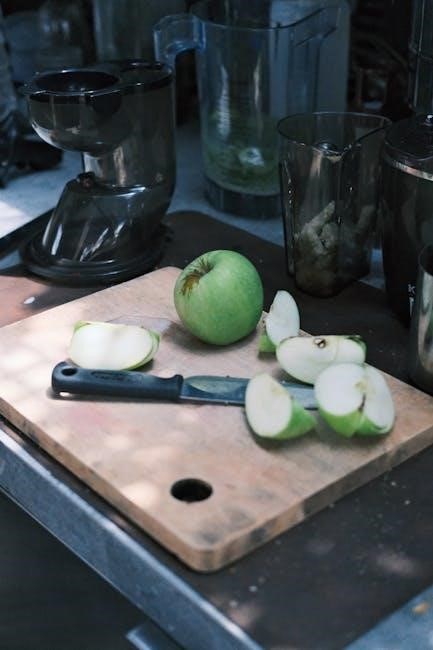
Prior to juicing, thoroughly wash all fruits and vegetables under cool running water. Remove any stickers or blemishes. For harder produce like carrots and apples, consider cutting them into smaller, manageable pieces – approximately 1-2 inches in size – to facilitate easier processing. Citrus fruits, such as oranges and grapefruits, may require peeling before juicing to prevent excessive pulp and bitterness.
Remove pits and large seeds from fruits like peaches and plums. Leafy greens, including spinach and kale, can be juiced whole or roughly chopped. Pineapple should have its rind removed. Ginger and turmeric can be juiced with their skin on, but scrubbing them clean is recommended. Avoid juicing avocado or bananas, as they lack sufficient juice content and may damage the juicer. Proper preparation ensures optimal juice yield and prevents strain on the motor.
Operating the Juicer: Powering On and Juicing
Ensure the juicer is correctly assembled and securely locked into place before plugging it into a grounded electrical outlet. Select the appropriate speed setting – low for soft fruits and vegetables, and high for harder produce. Gently feed prepared fruits and vegetables into the feed chute using the pusher. Never use your hands or other utensils to push produce down the chute.
Apply consistent, even pressure with the pusher to maximize juice extraction. Listen for any unusual noises or vibrations, and stop the juicer immediately if they occur. Allow the juicer to run for a few seconds after feeding the last piece of produce to ensure all remaining juice is extracted. The juicer will automatically stop if it overheats or experiences a blockage. Always turn off and unplug the juicer before disassembling or cleaning;
Juicing Different Types of Produce: Tips and Tricks
For leafy greens like spinach and kale, roll them tightly before feeding into the chute for efficient juicing. Citrus fruits benefit from peeling before juicing to avoid a bitter taste and protect the juicer’s motor. Hard vegetables such as carrots and beets may require cutting into smaller pieces to fit the feed chute.
Ginger and turmeric can be juiced in small quantities for a flavorful boost, but be mindful of their potent taste. Pineapple cores can be juiced, but remove the tough outer skin first. Avoid juicing avocado or bananas as they lack sufficient juice content and can clog the machine. Alternate between soft and hard produce to maintain consistent pressure and optimize juice yield. Remove large seeds from fruits like apples and pears before juicing to prevent damage to the juicer.
Pulp Ejection and Collection
Your Hamilton Beach juicer features an efficient pulp ejection system, separating juice from fiber automatically. The pulp collector, typically a transparent container, gathers the ejected pulp during operation. Regularly monitor the pulp collector’s fill level to prevent overflow and ensure continuous juicing. Empty the collector when it reaches approximately three-quarters full for optimal performance.
For minimal mess, position the juicer over a sink or trash receptacle during pulp ejection. The pulp can be repurposed for various uses, such as composting, baking, or adding to soups and stews. Some models have adjustable pulp settings, allowing you to control the amount of fiber in your juice. Ensure the pulp ejection chute is properly aligned with the collector to avoid spills. Always disconnect the juicer from the power source before handling the pulp collector.
Cleaning and Maintenance Procedures
Maintaining your Hamilton Beach juicer is crucial for hygiene and longevity. Always disconnect the appliance from the power outlet before cleaning. Disassemble all removable parts – pulp collector, juice container, filter basket, and lid – and wash them with warm, soapy water. Avoid abrasive cleaners or scouring pads, as they can damage the surfaces. The filter basket requires particular attention to remove any remaining pulp.
Rinse thoroughly all components and allow them to air dry completely before reassembling. The motor base can be wiped clean with a damp cloth; never immerse it in water. Regular cleaning after each use prevents pulp buildup and bacterial growth. Periodically inspect the components for any signs of wear or damage, replacing them as needed. Proper maintenance ensures optimal performance and extends the life of your juicer.
Disassembly for Thorough Cleaning
To ensure a comprehensive clean of your Hamilton Beach juicer, complete disassembly is essential. Begin by removing the juice collection container and the pulp container. Next, detach the lid assembly, carefully lifting it away from the motor base. The filter basket, often the most challenging part, typically unlocks with a slight twist or by pressing release tabs – consult your model’s specific instructions.
Once the filter basket is removed, inspect the strainer for any lodged pulp. Separate all individual components, including any locking rings or smaller parts. Refer to the exploded diagram in this manual for visual guidance if needed. Proper disassembly allows for meticulous cleaning of every surface, preventing residue buildup and ensuring hygienic juice preparation. Remember to keep track of all parts during disassembly for easy reassembly.
Troubleshooting Common Issues
If your Hamilton Beach juicer isn’t operating correctly, several common issues can be addressed. First, ensure the unit is properly assembled and locked into place; a misaligned component will prevent operation. If the motor hums but doesn’t spin, check for blockages in the feed chute or strainer. Excessive pulp buildup can cause this.
For juice leakage, verify the juice container is correctly positioned and the lid is securely fastened. If the juicer overheats, allow it to cool down before resuming use. Never operate the juicer continuously for extended periods. If you encounter unusual noises, immediately stop the juicer and inspect for foreign objects. Consult the full troubleshooting section in this manual for detailed solutions and safety precautions before attempting repairs.
Understanding Juicer Parts and Replacements
Your Hamilton Beach juicer consists of several key components, including the motor base, feed chute, strainer, pulp container, and juice collection pitcher. The strainer is crucial for separating juice from pulp, and its condition directly impacts juice quality. Regular inspection of the strainer for cracks or wear is essential.

Replacements for common parts, such as strainers, pulp bins, and pushers, are readily available through the Hamilton Beach website or authorized retailers. Using genuine Hamilton Beach replacement parts ensures compatibility and maintains the juicer’s performance. Always refer to your model number when ordering replacements. For discontinued parts, contact customer support for potential alternatives. Proper part identification is vital for successful repairs and continued juicing enjoyment.

Recipes for Delicious Juices
Unlock the full potential of your Hamilton Beach juicer with these refreshing recipes! Start with “Sunrise Boost” – juice 2 carrots, 1 orange, and ½ inch of ginger for an invigorating morning drink. For a green detox, combine 4 kale leaves, 1 cucumber, 1 green apple, and a squeeze of lemon. “Berry Bliss” blends 1 cup of mixed berries, ½ banana, and a splash of water for a sweet treat.

Experiment with combinations! Pineapple and mint create a tropical escape, while beetroot, apple, and carrot offer an earthy sweetness. Remember to wash all produce thoroughly before juicing. Adjust ingredient quantities to suit your taste preferences. Enjoy your freshly made juice immediately for optimal nutrient intake. Explore online resources for even more exciting juice recipes tailored to your Hamilton Beach juicer.
Juicer Settings and Speed Control
Your Hamilton Beach juicer features multiple speed settings to optimize juice extraction for various produce types. “Low” speed (typically 1) is ideal for soft fruits like berries and melons, minimizing pulp and maximizing yield. “High” speed (usually 2) excels with hard vegetables such as carrots and beets, ensuring thorough breakdown.
A “Pulse” function provides short bursts of power for challenging ingredients or to control consistency. Refer to your model’s specific manual for detailed speed recommendations. Experiment to find the best setting for your favorite fruits and vegetables. Avoid prolonged use on high speed with soft produce to prevent overheating. Proper speed selection enhances juice quality and extends the life of your juicer. Always start with a lower speed and gradually increase if needed.
Storage Instructions and Best Practices
Proper storage is crucial for maintaining your Hamilton Beach juicer’s longevity and hygiene. Before storing, ensure all parts are thoroughly cleaned and completely dry to prevent mold or mildew growth. Disassemble the juicer and store components separately in a cool, dry place. Avoid storing in direct sunlight or humid environments.
Consider storing smaller parts within the pulp container to prevent loss; Wrap the power cord loosely to avoid damage. If storing for an extended period, a light coating of food-grade mineral oil on stainless steel parts can prevent corrosion. Keep the original packaging for safe storage and transport. Regularly inspect stored parts for any signs of damage or deterioration. Following these practices will ensure your juicer remains in optimal condition for years to come.

Warranty Information and Customer Support
Your Hamilton Beach juicer is covered by a limited warranty against defects in materials and workmanship. The warranty period typically begins from the date of original purchase. Please retain your proof of purchase for warranty claims. The warranty does not cover damage resulting from misuse, accidents, or unauthorized repairs.
For warranty claims or customer support, please contact Hamilton Beach directly. Their customer service team can assist with troubleshooting, parts replacement, and warranty processing. Visit the Hamilton Beach website for frequently asked questions, downloadable manuals, and contact information. You can also reach them by phone or email. Hamilton Beach is committed to providing excellent customer service and ensuring your satisfaction with their products. Refer to the separate warranty document included with your juicer for complete details and terms.