rotator cuff injury exercises pdf
Rotator Cuff Injury Exercises PDF: A Comprehensive Guide
A printable PDF serves as a valuable tool for rehabilitation, offering clinicians a structured approach to guide patients through recovery and enhance care.
This document outlines a post-operative course, emphasizing individualized treatment based on exam findings and clinical decision-making for optimal results.
Clinicians utilize the PDF to introduce exercises, demonstrate proper form, and prescribe tailored routines, ensuring patients understand their rehabilitation journey.
Understanding Rotator Cuff Injuries
Rotator cuff injuries are remarkably common, impacting individuals across various activity levels, from athletes to those with everyday occupational demands. These injuries don’t typically stem from a single traumatic event, but rather develop gradually over time due to repetitive motions, overuse, or age-related degeneration.
Understanding the anatomy is crucial; the rotator cuff isn’t a single muscle, but a group of four muscles – supraspinatus, infraspinatus, teres minor, and subscapularis – that surround the shoulder joint. They work synergistically to provide stability, control arm movement, and facilitate a wide range of motion.
A rotator cuff exercises PDF becomes invaluable in this context, offering a structured rehabilitation pathway. It’s essential to recognize that proper diagnosis and a tailored exercise program, guided by a healthcare professional, are paramount for successful recovery and preventing future occurrences. Ignoring early symptoms can lead to chronic pain and functional limitations.
What is the Rotator Cuff?
The rotator cuff is a group of four distinct muscles – the supraspinatus, infraspinatus, teres minor, and subscapularis – and their corresponding tendons. These structures encircle the shoulder joint, providing crucial stability and enabling a wide range of motion in the arm. They aren’t merely responsible for lifting the arm, but also for controlling its rotation and preventing dislocation during movement.
These muscles work in harmony, allowing for smooth, coordinated shoulder function. The supraspinatus initiates arm abduction (lifting the arm away from the body), while the other muscles contribute to external and internal rotation. Tendons attach these muscles to the humerus (upper arm bone).
A rotator cuff exercises PDF is designed to address dysfunction within this complex system. Understanding this anatomy is fundamental to appreciating the purpose and benefits of each exercise prescribed within a rehabilitation program, ultimately restoring optimal shoulder mechanics.
Causes of Rotator Cuff Injuries
Rotator cuff injuries rarely stem from a single, acute event. More commonly, they develop gradually over time due to repetitive overhead motions, common in sports like baseball, tennis, and swimming. Occupations requiring frequent arm elevation, such as painting or construction, also contribute to risk.
Age-related degeneration plays a significant role, as tendons lose elasticity and become more susceptible to tearing. This process is often exacerbated by poor posture or improper lifting techniques. Direct trauma, like a fall onto an outstretched arm, can cause an immediate tear.
A rotator cuff exercises PDF is often prescribed to address these issues, but understanding the underlying cause is crucial. Rehabilitation programs aim to strengthen supporting muscles, improve biomechanics, and prevent re-injury, regardless of the initial trigger.
Symptoms of a Rotator Cuff Injury
Recognizing symptoms is the first step towards effective management, often guided by a rotator cuff exercises PDF. Pain is the most common indicator, frequently felt at the shoulder, and may radiate down the arm. This discomfort often worsens during activity and at night, potentially disrupting sleep.
Weakness is another key symptom, making it difficult to lift or rotate the arm. Individuals may experience a limited range of motion, struggling with everyday tasks like reaching overhead or dressing. A clicking or popping sensation during movement can also occur.
The severity of symptoms varies depending on the extent of the injury. A PDF outlining exercises can help manage pain and restore function, but a proper diagnosis from a healthcare professional is essential for appropriate treatment.
The Role of a Rotator Cuff Exercises PDF in Rehabilitation
A comprehensive PDF empowers both clinicians and patients, providing a structured, accessible resource for guided rehabilitation and consistent exercise adherence.
Benefits of Using a Printable PDF
Printable PDFs offer numerous advantages in rotator cuff rehabilitation. They enhance patient education by providing clear, visual instructions for each exercise, promoting understanding and adherence. Accessibility is key; patients can easily access the PDF at home, facilitating consistent practice outside of clinical sessions.
A PDF format allows for standardized exercise prescriptions, ensuring all patients receive the same high-quality guidance. Clinicians can personalize the PDF by highlighting specific exercises or adding notes tailored to individual needs. Portability is another benefit, enabling patients to continue their rehabilitation while traveling.
Furthermore, a well-designed PDF can track progress, with spaces for patients to record sets, repetitions, and pain levels. This fosters self-monitoring and encourages active participation in the recovery process. Ultimately, a rotator cuff exercise PDF streamlines rehabilitation, improving outcomes and patient satisfaction.
How Clinicians Utilize the PDF
Clinicians leverage the rotator cuff exercise PDF throughout the rehabilitation process, starting with the initial assessment. They introduce each exercise, demonstrating proper form and explaining its purpose to establish clear patient expectations. Based on individual conditions and rehabilitation stages, clinicians prescribe tailored exercise sets directly from the PDF.
The PDF serves as a visual aid during sessions, reinforcing instructions and ensuring correct technique. Clinicians use it to monitor patient progress, noting any difficulties or modifications needed. They can also annotate the PDF with specific cues or reminders for each patient.
Moreover, the PDF facilitates home exercise programs, empowering patients to continue rehabilitation independently. Clinicians review the completed PDF during follow-up appointments, assessing adherence and adjusting the program as needed, ensuring optimal recovery.
Patient Education with the PDF
The rotator cuff exercise PDF is a powerful patient education tool, fostering understanding and engagement in the rehabilitation process; It visually demonstrates each exercise, clarifying proper technique and minimizing the risk of incorrect form. Patients appreciate having a tangible resource to refer to outside of clinical sessions.
The PDF explains the rationale behind each exercise, helping patients understand why they are performing them, increasing motivation and adherence. It reinforces the importance of consistent home exercise programs for optimal recovery. Clinicians can use the PDF to address patient questions and concerns, promoting open communication.
Furthermore, the PDF empowers patients to take ownership of their rehabilitation, promoting self-management and long-term shoulder health. It serves as a valuable reference point throughout their recovery journey.
Phases of Rotator Cuff Rehabilitation & Exercises
Rehabilitation progresses through distinct phases – pain control, range of motion restoration, strengthening, and functional progression – guided by the PDF exercises.
Each phase builds upon the previous, ensuring a safe and effective return to activity, tailored to individual patient needs.
Phase 1: Initial Assessment & Pain Control
The initial phase focuses on managing pain and inflammation, establishing a baseline for progress using the rotator cuff exercises PDF. Clinicians perform a thorough assessment, introducing exercises and explaining their purpose to the patient, fostering understanding and adherence.
Early range of motion exercises are crucial, initiating gentle movements to prevent stiffness without exacerbating pain. Pendulum exercises, a cornerstone of this phase, utilize the arm’s weight to promote pain-free motion, gradually increasing the range.
It’s vital to delay strengthening exercises until active range of motion is nearly pain-free and mobility is approaching normal levels. Range of motion and stretching exercises should be performed daily, but progression must be cautious and guided by the patient’s tolerance. This phase sets the foundation for subsequent rehabilitation stages.
Early Range of Motion Exercises
These exercises, detailed within the rotator cuff exercises PDF, are initiated to gently restore movement and prevent stiffness following injury or surgery. The focus is on pain-free motion, avoiding any activities that increase discomfort. Clinicians guide patients through these movements, emphasizing proper form and controlled execution.
Initial movements are typically small and gradual, progressively increasing the range as tolerated. The goal is to maintain joint mobility without stressing the injured rotator cuff tendons. These exercises prepare the shoulder for more advanced rehabilitation phases.
Careful monitoring of pain levels is essential; any increase in discomfort signals the need to modify or temporarily halt the exercise. Consistent, gentle range of motion exercises are foundational for a successful recovery, as outlined in the PDF.
Pendulum Exercises
Pendulum exercises, a cornerstone of early rotator cuff rehabilitation detailed in the PDF, utilize gravity to gently mobilize the shoulder joint. Patients lean forward, supporting themselves with their non-affected arm, allowing the injured arm to hang freely. Small, circular motions are then initiated, resembling a pendulum swinging.
These movements should be pain-free and controlled, focusing on gentle stretching and restoring initial range of motion. The PDF emphasizes avoiding forceful swings or jerky movements, which could exacerbate the injury. Gradually, the circles can be increased in size and direction;
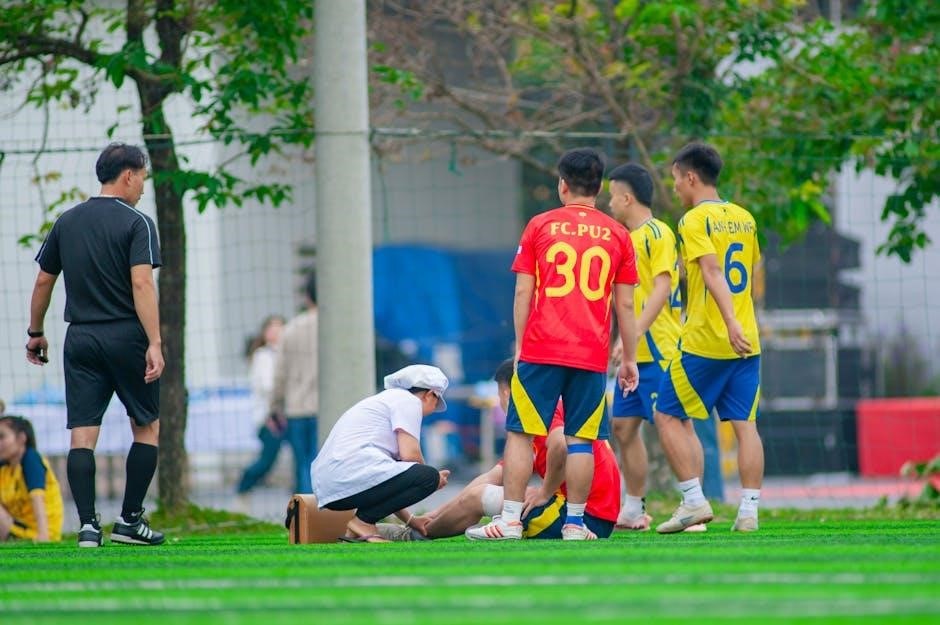
Pendulum exercises are beneficial for reducing pain and preventing stiffness, preparing the shoulder for more active range of motion exercises. Consistent performance, as guided by the PDF, is crucial for optimal recovery and regaining shoulder function.
Phase 2: Restoring Range of Motion
Phase 2, as outlined in the rotator cuff exercises PDF, focuses on regaining shoulder mobility after the initial pain control stage. This phase incorporates a progression of exercises, starting with passive range of motion, where an external force – often the unaffected arm or a cane – moves the injured arm.
Following this, active-assisted range of motion exercises are introduced, combining patient effort with external assistance. The PDF details specific techniques, like using a stick or cane for external rotation, where the healthy arm guides the affected arm’s movement.
The goal is to gradually increase the shoulder’s range of motion without causing pain, preparing it for strengthening exercises. Consistent adherence to the PDF’s prescribed exercises is vital for achieving optimal recovery and functional improvement.
Passive Range of Motion Exercises
Passive range of motion (PROM) exercises, detailed within the rotator cuff exercises PDF, are crucial in Phase 2 for restoring shoulder mobility. These exercises involve an external force moving the injured arm, minimizing patient effort and pain. The PDF emphasizes utilizing the unaffected arm or a tool like a cane to gently guide the affected limb through its range.
Specifically, the document illustrates techniques where the normal arm assists in elevating and rotating the injured arm. Maintaining a relaxed and pain-free movement is paramount; forcing the range can exacerbate the injury. The PDF instructs clinicians to monitor patient response closely, adjusting the intensity as needed.
PROM exercises aim to prevent stiffness and maintain joint lubrication, preparing the shoulder for active movement in subsequent phases of rehabilitation.
Active-Assisted Range of Motion Exercises
Active-assisted range of motion (AAROM) exercises, as outlined in the rotator cuff exercises PDF, bridge the gap between passive movement and independent activity. These exercises require the patient to initiate the movement, while assistance is provided to complete the range, particularly when weakness limits full motion.
The PDF highlights the use of a stick or cane to facilitate external rotation, with the healthy arm guiding the injured arm overhead. It’s crucial to keep the affected arm tucked close to the body, elbow bent at 90 degrees, and hand pointing upwards during this process.
AAROM exercises help improve neuromuscular control and gradually build strength, preparing the shoulder for more demanding strengthening activities. The document stresses performing these exercises gently and within a pain-free range.
Stick/Cane Exercises for External Rotation
The rotator cuff exercises PDF details stick/cane exercises as a key component of phase two rehabilitation, focusing on restoring external rotation. These exercises utilize a cane or stick held in both hands to assist and guide the injured arm through its range of motion.
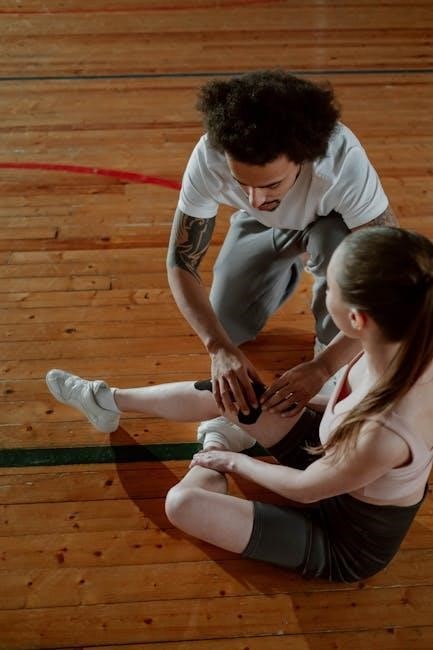
The PDF instructs the patient to keep the affected arm tucked close to the body, with the elbow bent at a 90-degree angle, hand pointing towards the ceiling. The unaffected arm then actively moves both arms, guiding the injured arm into external rotation.
This technique allows for a gentle, controlled stretch and strengthening of the external rotator muscles. It’s important to maintain proper form and avoid forcing the movement beyond a comfortable range, as outlined in the document.
Phase 3: Strengthening Exercises
The rotator cuff exercises PDF emphasizes that strengthening should be delayed until near-normal, pain-free active range of motion is achieved. Phase three focuses on rebuilding strength in the rotator cuff muscles, utilizing a variety of targeted exercises.
The PDF outlines isometric exercises as a starting point, followed by progressive strengthening of external and internal rotation. Scaption exercises, performed in the scapular plane, are also included to target specific muscle groups.
Prone rows are recommended to strengthen the mid-back and scapular stabilizers, contributing to overall shoulder stability. The document stresses the importance of proper form and controlled movements throughout these exercises, gradually increasing resistance as strength improves.
Isometric Exercises
The rotator cuff exercises PDF introduces isometric exercises as a foundational component of Phase 3 strengthening. These exercises involve contracting the rotator cuff muscles without any joint movement, providing a safe and effective way to initiate strength gains.

The PDF details performing isometric exercises in multiple directions – external rotation, internal rotation, abduction, and flexion – to target all rotator cuff muscles. Patients are instructed to hold each contraction for a specified duration, typically 5-10 seconds, repeating several times.
Isometric exercises are particularly beneficial in the early stages of strengthening as they minimize stress on the healing tissues while activating the necessary muscles. The document emphasizes maintaining proper posture and avoiding any compensatory movements during these contractions.
External Rotation Strengthening
The rotator cuff exercises PDF progresses to external rotation strengthening, crucial for restoring shoulder stability and function. This phase utilizes resistance bands or light dumbbells to challenge the infraspinatus and teres minor muscles, key external rotators.
The PDF illustrates several variations, including side-lying external rotation and standing external rotation with a resistance band anchored. Patients are guided to maintain a 90-degree elbow bend, keeping the upper arm close to the body throughout the exercise.
The document stresses controlled movements and avoiding compensation from other muscle groups. It advises starting with low resistance and gradually increasing it as strength improves. Proper form is paramount to prevent re-injury and maximize effectiveness, ensuring targeted muscle engagement.
Internal Rotation Strengthening
The rotator cuff exercises PDF details internal rotation strengthening, vital for balanced shoulder function alongside external rotation work. This phase commonly employs resistance bands anchored to a stable object, or light dumbbells, to target the subscapularis muscle.
The PDF demonstrates exercises like seated internal rotation, keeping the elbow tucked into the side and performing controlled rotations towards the abdomen. Patients are instructed to avoid excessive speed or momentum, focusing on muscle activation.
The document emphasizes maintaining proper posture and preventing shoulder hiking during the exercise. It recommends starting with minimal resistance and progressively increasing it as strength develops. Consistent, controlled repetitions are key to achieving optimal results and preventing compensatory movements.
Scaption Exercises
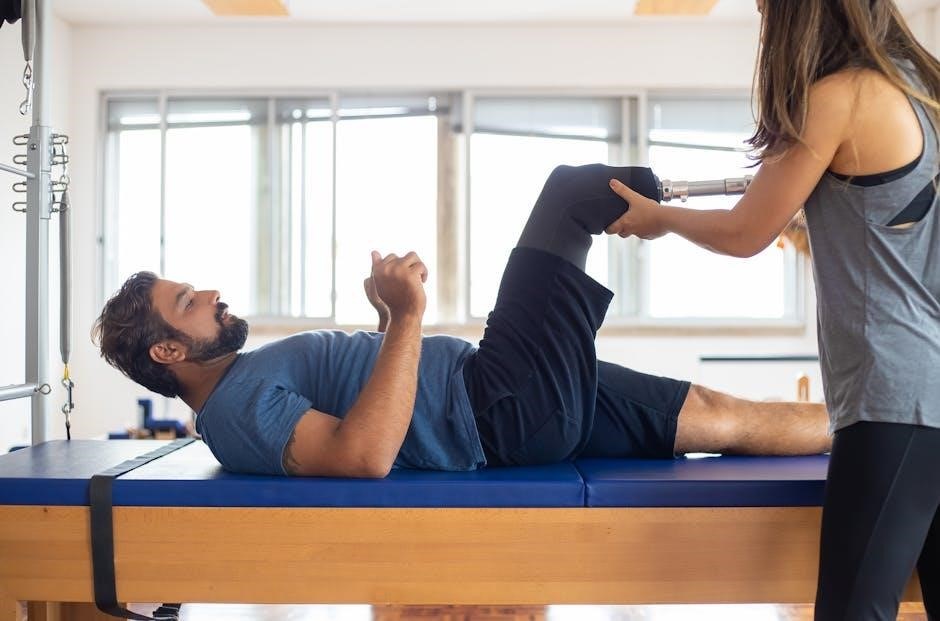
The rotator cuff exercises PDF highlights scaption as a crucial movement for restoring shoulder function, differing from traditional abduction. Scaption involves raising the arm at a 30-45 degree angle forward in the scapular plane, minimizing impingement risk.
The PDF illustrates performing scaption with light dumbbells or resistance bands, emphasizing slow, controlled movements. Patients are guided to focus on initiating the movement from the scapula, not just the shoulder joint.
The document stresses maintaining a neutral wrist and elbow position throughout the exercise. It advises starting with a low weight and gradually increasing resistance as strength improves. Proper form is paramount to avoid compensatory movements and maximize the effectiveness of the exercise for rotator cuff rehabilitation.
Prone Rows
The rotator cuff exercises PDF details prone rows as a vital strengthening exercise, targeting the posterior deltoid and lower trapezius – key muscles for shoulder stability. Patients perform this exercise lying face down on a bench or the floor, maintaining a neutral spine.
The PDF instructs using light dumbbells or resistance bands, pulling the weight towards the chest while keeping the elbow close to the body. Emphasis is placed on squeezing the shoulder blades together during the rowing motion.
The document advises controlled movements, avoiding excessive weight that could compromise form. It highlights the importance of engaging the core to maintain stability throughout the exercise. Prone rows contribute significantly to restoring functional strength and preventing re-injury.
Phase 4: Functional Progression & Return to Activity
The rotator cuff exercises PDF outlines Phase 4 as the crucial stage for returning to desired activities. This phase focuses on sport or activity-specific tasks, gradually reintroducing movements that mimic real-life demands. The PDF emphasizes that active range of motion and strength must be within functional limits before discharge from physical therapy.
Advanced strengthening exercises are incorporated, building upon the foundation established in previous phases. Clinicians utilize this stage to assess the patient’s ability to perform complex movements without pain or compensation.
The document stresses a progressive approach, increasing intensity and complexity as tolerated. Successful completion of Phase 4 signifies the patient’s readiness to resume their normal activities with minimized risk of re-injury, guided by the PDF’s protocols.
Sport/Activity-Specific Tasks
The rotator cuff exercises PDF details that this stage involves replicating movements essential for the patient’s desired activities. For athletes, this might include throwing, swinging, or lifting motions, carefully progressed under a clinician’s guidance. The PDF emphasizes a gradual return, starting with low-intensity drills and progressively increasing complexity.
For non-athletes, tasks are tailored to daily living, such as reaching overhead, lifting objects, or performing work-related activities. The focus is on proper form and technique to prevent compensatory movements and minimize stress on the repaired rotator cuff.
The PDF’s protocols ensure a safe and effective transition back to function, prioritizing pain-free movement and preventing re-injury. Regular assessment by the clinician is crucial to monitor progress and adjust the program as needed.
Advanced Strengthening Exercises
The rotator cuff exercises PDF outlines that once foundational strength is established, advanced exercises are introduced to challenge the muscles further. These typically include variations of external and internal rotation with resistance bands or light weights, progressing in intensity as tolerated.
Scaption exercises, performed in the scapular plane, are also emphasized to target the supraspinatus effectively. Prone rows with light dumbbells further enhance scapular stabilization and posterior shoulder strength. The PDF stresses maintaining proper form throughout all exercises to avoid compensatory movements;
Clinicians carefully monitor the patient’s response, adjusting resistance and repetitions based on pain levels and functional improvements. The goal is to achieve optimal strength and endurance, preparing the shoulder for a full return to activity.
Important Considerations & Precautions
Strengthening exercises should be delayed until near-normal range of motion and minimal pain are achieved, prioritizing proper form and individualized treatment plans.
Maintaining correct arm positioning—tucked close to the body—is crucial, and consulting a healthcare professional is vital for any concerns.
Delaying Strengthening Exercises
Prematurely initiating strengthening exercises for the rotator cuff can be detrimental to the healing process and potentially exacerbate pain or re-injury. The foundational principle guiding rehabilitation is to prioritize restoring full, pain-free range of motion before introducing resistance training.
Specifically, rotator cuff strengthening should be postponed until active range of motion is nearly complete and mobility is approaching normal levels. This typically means achieving active elevation above 120 degrees and passive internal rotation with the arm abducted approaching 50 degrees.
This cautious approach ensures the surrounding muscles and tendons are adequately prepared to handle the increased demands of strengthening, minimizing the risk of further damage. Clinicians utilize their expertise to assess individual progress and determine the optimal timing for advancing to this phase of rehabilitation, always prioritizing patient safety and long-term success.
Remember, patience and adherence to a progressive protocol are key to a full recovery.
Keeping the Affected Arm Positioned Correctly
Maintaining proper arm positioning during exercises is crucial for maximizing effectiveness and preventing compensatory movements that could hinder recovery or cause further injury. A key principle is to keep the affected arm tucked close to the body throughout many exercises, particularly those focusing on rotation.
For example, when performing external rotation exercises with a cane, ensure the elbow is bent to 90 degrees, with the hand pointed towards the ceiling. The healthy arm should then guide the affected arm’s movement, avoiding any strain or discomfort.
This positioning minimizes stress on the healing rotator cuff tendons and allows for isolated muscle activation. Clinicians emphasize these details during instruction, providing visual cues and hands-on guidance to ensure patients understand and consistently implement correct form.
Consistent attention to positioning is paramount for optimal rehabilitation outcomes.
Individualized Treatment Plans
The rotator cuff exercises PDF serves as a foundational resource, but successful rehabilitation hinges on creating individualized treatment plans tailored to each patient’s unique condition and progress. A standardized approach doesn’t account for variations in injury severity, pre-existing conditions, or individual healing rates.
Clinicians leverage their expertise to assess each patient thoroughly, considering exam findings and clinical decision-making. Exercise prescription from the PDF is then adapted, selecting specific exercises and adjusting intensity and repetitions based on the patient’s tolerance and response.
This personalized approach ensures exercises are challenging yet safe, promoting optimal recovery without exacerbating pain or risking re-injury. Regular reassessment and plan adjustments are vital throughout the rehabilitation process.
Ultimately, a customized plan maximizes the effectiveness of the exercises.
When to Contact a Healthcare Professional
While the rotator cuff exercises PDF provides a valuable guide for rehabilitation, it’s crucial to recognize situations requiring professional medical attention. Persistent or worsening pain despite following the prescribed exercises is a key indicator to seek help.
Any new symptoms, such as numbness, tingling, or significant weakness in the arm or hand, should prompt immediate consultation with a healthcare professional. Similarly, a sudden increase in swelling or redness around the shoulder warrants evaluation.
If you experience difficulty performing daily activities due to shoulder pain or limited range of motion, don’t hesitate to contact your doctor or physical therapist;
Remember, this PDF is a supplement to, not a replacement for, professional medical advice.